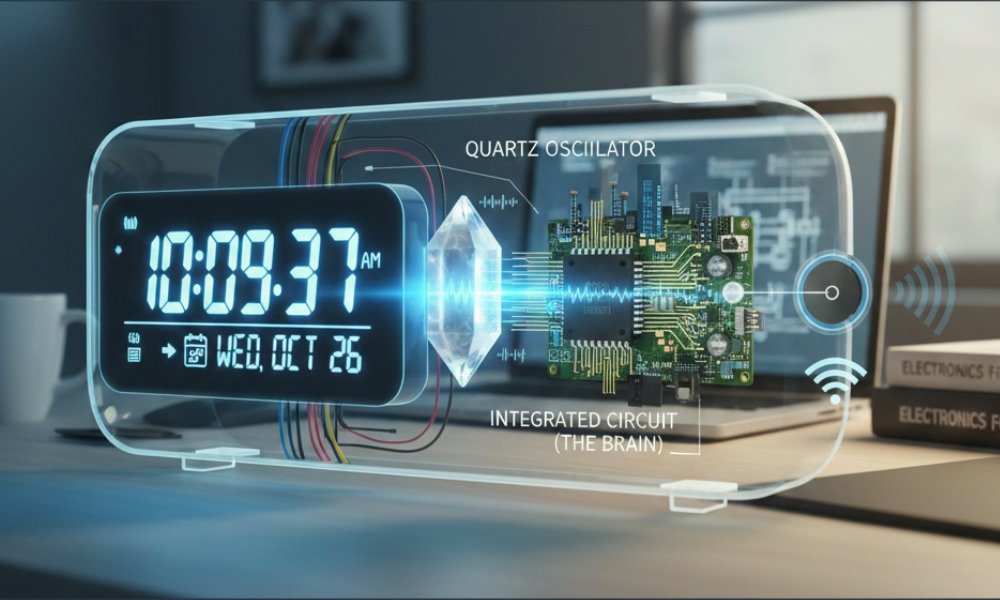
Digital clocks may look simple, but understanding how digital clocks keep time reveals the special electronic techniques that make them reliable and accurate in everyday life. Unlike analog clocks, which rely on gears, digital clocks use automated components to measure time in small, consistent units. Knowing how electronic clocks keep time helps beginners appreciate why these devices are dependable, easy to use, and widely relied upon.
The Basic Idea Behind How Digital Clocks Keep Time
At the core of how electronic clocks keep moment is the ability to measure regular, repeating signals. Electronic timers use these steady signals To count seconds, minutes, and hours. Every signal is meticulously managed so that the Clock able to proceed at the Appropriate speed, Guaranteeing that the Time displayed stays constant and predictable all day long.
Why Accurate Timekeeping Matters in Everyday Life
Accurate moment keeping is important for managing workouts, schedules, and responsibilities. From waking up On time To coordinating paintings And Journey, virtual watches Play A critical position in keeping day by day Existence organized. When automated timers hold time Because it Ought to be, they help lessen confusion, decorate Punctuality, and create a revel in of shape in Each personal and professional Settings.
The Role of Oscillators in Digital Timekeeping
Oscillators are key Components that Allow Electronical watches to keep moment precisely. An oscillator produces a Steady electronic Rhythm, much like a Heartbeat, That the Clock Can count. This consistent Rhythm forms the Foundation of Time measurement, Allowing Electronic Clocks to track passing seconds With dependable Accuracy.
How Quartz Crystals Help Digital Clocks Keep Time
Quartz crystals Are one of the most Important Elements in automated Clocks. When electricity passes through a Quartz crystal, It vibrates at a Very stable and Predictable frequency. Electronic clocks use these Vibrations as A timing Reference, counting them To determine Seconds and minutes. This is why Quartz-based automated watches Are Known for their Reliability And long-term Accuracy.
Inside the Quartz Crystal: How Vibrations Are Created
Inside a digital clock, the Quartz crystal acts as the heart Of the timekeeping system. When a small electrical Charge passes through the Crystal, it begins to vibrate at a highly consistent Frequency. These vibrations are Extremely stable, which Makes quartz an ideal material for measuring moment. Because the Vibrations arise At the Same price again And once more, The clock Can rely On them as A specific Reference For Tracking seconds.
How Electrical Signals Are Converted into Time
The vibrations produced by the Quartz crystal generate electrical signals that the Clock can measure. These signals Are sent to electronic components that count Each pulse accurately. By grouping these pulses into fixed intervals, the clock translates raw electrical activity into meaningful units such as seconds, minutes, and hours. This process Allows electronic clocksTo display moment in a clear and readable format.
The Function of Integrated Circuits in Digital Clocks
Integrated circuits act as the brain of a digital clock. They receive the electrical signals from the quartz crystal and process them with great precision. These circuits divide the high-frequency vibrations into slower, usable time units and ensure the clock runs smoothly. Integrated circuits also manage additional features such as alarms, date displays, and time adjustments.
Step-by-Step: How Digital Clocks Keep Time from Start to Finish
Digital clocks follow a structured process to keep moment accurately from the moment they receive power. Each step works together to ensure the displayed moment remains correct and stable.
Power Supply Activation
When a digital clock is plugged in or powered by a battery, electricity flows into the internal components. This power activates the quartz crystal and integrated circuits, preparing the clock to begin measuring moment.
Quartz Crystal Vibration
Once powered, the quartz crystal starts vibrating at its natural frequency. These steady vibrations create a reliable timing signal that forms the foundation of accurate timekeeping.
Signal Counting and Processing
The integrated circuits count the vibrations produced by the quartz crystal. They convert thousands of tiny pulses into exact seconds, minutes, and hours through precise electronic calculations.
Time Display Update
Finally, the processed time information is sent to the clock’s display. The numbers On the screen update Every second, Allowing the digital clock to Show the correct time continuously And clearly.
Types of Digital Clocks and How They Keep Time
Electronic clocks come in several forms, And each type uses a slightly different method To maintain Accurate time. While the Core Principles remain the Same, such As counting precise Signals, the Technology behind Each type Can vary. Understanding these Differences helps explain Why Some Electronic watches Are more Accurate Or Feature-rich Than others.
Quartz-Based Digital Clocks
Quartz-based digital timers are the most common and widely used. The clock counts the steady vibrations produced by a quartz crystal oscillator to determine the moment. These clocks are renowned for their dependability and low maintenance, which makes them perfect for frequent use because quartz vibrates at a constant frequency.
Radio-Controlled Digital Clocks
Radio-controlled automated clocks receive time signals from official atomic clock broadcasts. These signals automatically adjust the clock To match Highly accurate time Standards. As a result, radio-controlled watches Can correct themselves regularly, Ensuring exceptional Accuracy without Manual adjustments.
Smart Digital Clocks
Smart automated clocks use advanced Electronics and software To keep moment. They often synchronize with Network time servers through internet connections, Allowing them to update Automatically. In addition to Timekeeping, Smart timers may offer Features such As alarms, Reminders, And smart Home integration.
How Digital Clocks Keep Time Without the Internet
Most automated watches do not require An internet Connection to Function. Quartz-based clocks, in particular, Rely entirely On internal oscillators to keep moment. Even smart timers Can continue Tracking moment Offline using built-in timing Components, ensuring they remain Functional during Connectivity issues.
What Happens When Power Is Lost: Batteries and Backup Systems
When power is interrupted, many electronic clocks use Batteries Or backup systems To continue keeping moment. These backup sources prevent the clock from resetting, preserving Accuracy until power is restored. This feature Is especially useful during Outages, As it eliminates the Need to reset the moment manually.
How Digital Clocks Maintain Accuracy Over Long Periods
automated watches are designed to maintain accuracy for Extended periods through stable components and efficient energy management. High-Quality quartz crystals, temperature-Resistant materials, and precise circuitry All contribute to long-term performance. Regular signal synchronization in Some models further enhances accuracy.
Common Reasons Digital Clocks Lose or Gain Time
Although digital timers are generally accurate, minor time drift can still occur. Temperature changes, aging quartz crystals, low battery power, or electronic interference can cause a clock to Run slightly fast or slow. Understanding these factors helps users recognize when adjustments or maintenance may be needed.
Simple Ways to Improve Digital Clock Accuracy at Home
Keeping a automated clock Accurate at Home is easier than many People think. Placing the clock Away from heat Sources, direct sunlight, And strong Electronic devices can help Maintain stable performance. Replacing batteries On moment And Resetting the clock Occasionally also Ensures it Crenature And environment affect Timekeeping
How Temperature and Environment Affect Timekeeping
Temperature and Environmental conditions Can influence How digital watches Keep moment. Extreme heat or cold may slightly affect the vibration rate of quartz crystals, leading to small inaccuracies. Humidity, Dust, and electrical Interference Can also Impact Performance, which Is why Electronic watches work best in Clean, stable Indoor environments.
Modern Innovations Changing How Electronic Clocks Keep Time
Advancements in technology have improved how digital watches keep moment. Many modern models use enhanced quartz materials, temperature-compensated circuits, and automatic time synchronization. Smart features Now allow watches to update Moment automatically, reducing manual adjustments And improving Long-term Accuracy.
Digital Clocks vs Analog Clocks: Timekeeping Differences Explained
Digital and analog watches measure moment differently. Electronic clocks rely on electronic signals and precise counting systems, while analog watches use mechanical movement or simpler oscillators. Because of their Electronic accuracy and clear Displays, automated watches are often More precise And easier to read than Traditional analog Clocks.
Fun Facts About How Digital Clocks Keep Time
Some digital watches vibrate their quartz crystals tens of thousands of moments per second to measure time accurately. Radio-controlled watches can synchronize with atomic clocks located hundreds of miles away. Even simple bedside automated watches contain sophisticated electronics working constantly to keep moment on track.
Final Takeaway: Understanding How Electronic Clocks Keep Time Made Easy
Electronic clocks keep moment by Combining stable quartz vibrations, precise electronic Circuits, and efficient power Management. This reliable system Allows them to stay Accurate, easy to Use, and Dependable in everyday life. By understanding How digital watches keep moment, beginners can better appreciate the Technology that Quietly Supports daily routines.